The Single Most-Asked CFO Question About Reshoring
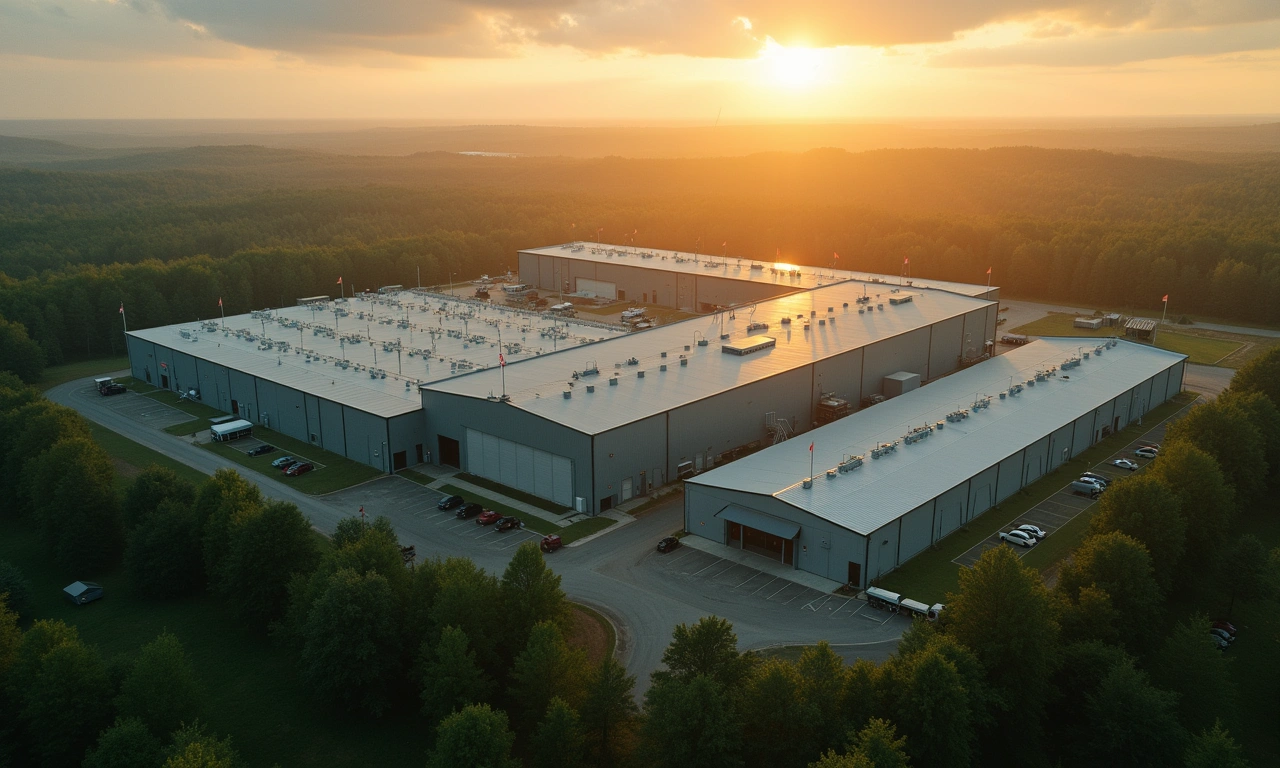
"How long until we get our money back?" is the question that stops more reshoring feasibility studies than any other. It is also the question for which the least practitioner-ready data exists. Academic studies model national-level reshoring economics. Consulting white papers cite proprietary benchmarks without transparent methodology. Neither gives a CFO at a $20M manufacturer a reliable answer for their specific industry and capital structure.
This page provides the first practitioner-ready reshoring payback period benchmark dataset across five major manufacturing industries, built from published sources with transparent modeling assumptions. The benchmarks are estimated ranges — not guarantees. Individual results depend on specific capital structure, tariff exposure, and incentive availability.
But they give CFOs a credible starting point for internal feasibility discussions, board presentations, and investment committee analyses.
Important: these are estimated ranges based on published industry data, not statements of guaranteed outcomes. Read the assumptions for each industry benchmark before using these figures in financial models. For full break-even modeling methodology, see our Break-Even Analysis Template.
For full ROI modeling, see our Reshoring ROI Calculator.
Reshoring Payback Period Benchmarks by Industry
The table below maps estimated payback period ranges across five industries. All ranges are illustrative estimates based on published Reshoring Initiative data, BLS productivity statistics, and DoD industrial policy analyses. Ranges reflect typical capex profiles and incentive stacks for each industry — they do not account for exceptional capex (greenfield semiconductor fabs) or exceptional incentive packages (state-level megasite deals).
| Industry | Typical Capex Range | Primary Tariff Driver | Key Federal Incentive | Est. Payback Range | Key Assumption Driving Payback |
|---|---|---|---|---|---|
| Automotive / EV Supply Chain | $3M–$20M | Section 301 (Chinese parts), Section 232 (steel/aluminum) | 45X Production Credit | 4–7 years | 45X eligibility (battery, EV components); tariff rate on specific HS code |
| Semiconductors / Electronics | $5M–$50M+ | Section 301 (Chinese chips, 50%) | CHIPS Act grants; 48C ITC | 5–9 years | CHIPS Act grant eligibility; clean room capex premium vs. standard manufacturing |
| Defense / Aerospace | $2M–$15M | NDAA domestic content mandate (not tariff) | DoD NDAA domestic mandates; DPA Title III | 2–4 years | Domestic content customer premium (8–15%); AS9100 qualification speed |
| Pharmaceuticals / Biotech | $3M–$25M | API supply security mandates (not primarily tariff) | Drug security grants (BARDA, ASPR); FDA fast-track | 3–6 years | Hospital/GPO domestic sourcing premium (5–12%); FDA process validation timeline |
| Consumer Goods | $1M–$8M | Section 301 (general manufactured goods) | Limited (no major federal incentive program) | 7–12 years | High US labor premium relative to offshore; limited federal incentive access; thin product margins |
All estimates are illustrative ranges based on published data sources. Individual results vary. Source: Reshoring Initiative annual report; BLS industry data; DoD Office of Industrial Policy. This is not financial advice.
Defense and aerospace consistently shows the fastest payback (2-4 years) despite not being primarily tariff-driven. The driver is domestic content mandates under the National Defense Authorization Act (NDAA), which create enforceable customer price premiums for domestic production — effectively a guaranteed revenue uplift that dramatically compresses payback independent of tariff policy. For defense sub-contractors, reshoring economics are more durable than in any other sector because the customer premium is contractually mandated, not market-dependent.
Source: DoD Office of Industrial Policy.
What Drives Payback Acceleration Below the Industry Average
Within any industry benchmark range, individual projects can achieve payback periods at the low end — or exceed the high end — based on four specific factors. Understanding these factors allows CFOs to design reshoring projects that maximize payback speed rather than accepting the industry average as fixed.

How Financing Structure Affects Payback Period
The same reshoring project can produce materially different payback periods depending on how it is capitalized. The table below illustrates how four common financing structures affect the payback period for a hypothetical $6M reshoring capex project with $1.2M annual net pre-debt benefit. All figures are illustrative.
| Financing Structure | Annual Debt Service (Est.) | Net Annual Benefit After Debt | Payback Period (Est.) | Key Trade-Off |
|---|---|---|---|---|
| All-Equity (No Debt) | $0 | $1.20M | 5.0 years | Fastest payback but most capital-intensive; opportunity cost on equity |
| SBA 504 (25-yr term, 6.1%) | ~$455K/yr | $745K | 8.1 years | Preserves equity; longest term minimizes annual service; best for most mid-market operators |
| Conventional Bank Term (10-yr, 7.5%) | ~$855K/yr | $345K | 17.4 years | Shortest term = highest annual service; rarely optimal for reshoring capex |
| SBA 504 + 45X Credit Stack | ~$455K/yr (debt) − $750K (credit) | $1.495M effective | 4.0 years | Best overall structure for qualifying manufacturers; 45X effectively offsets majority of debt service |
All figures are illustrative estimates based on a $6M capex project with $1.2M pre-debt annual net benefit. Actual debt service depends on lender terms, LTV, and prevailing rates. 45X credit amount depends on production volume and qualifying component classification. This is not financial advice.
The key insight: incentive stacking (45X or 48C credits plus state grants) combined with a long-term SBA 504 structure can reduce the effective payback by 2-4 years compared to conventional bank financing alone. For eligible manufacturers, the capital structure decision is almost as important as the investment decision itself.
See our guide to state and federal manufacturing incentive stacking for a full analysis of available incentive programs and how to combine them. For SBA 504 mechanics, see How to Finance a US Factory Expansion.
Three Mini-Cases Across Three Industries
A hypothetical Ohio-based Tier 2 precision bearing manufacturer for EV drivetrains. Imports $2.8M/year in Chinese-origin bearings at 25% Section 301 tariff. Reshoring to existing brownfield facility in Dayton, OH. 45X credit eligible (qualifying drivetrain components).
Capex: $4.5M (brownfield reduces cost by ~40% vs. greenfield).
Annual economics: Tariff savings $700K + 45X credits $820K + lead time value $150K − US labor premium $280K − SBA 504 debt service $340K = net $1.05M/year.
A hypothetical Texas-based printed circuit board assembler importing $3.6M/year in Chinese-origin PCB assemblies at 35% Section 301 tariff. No 45X eligibility (PCB assemblies do not currently qualify). Greenfield facility in Austin, TX.
Capex: $7.8M. Limited state incentives ($200K one-time grant).
Annual economics: Tariff savings $1.26M + lead time value $180K − US labor premium $420K − domestic overhead $160K − SBA 504 debt service $590K = net $270K/year after state grant amortization.
A hypothetical Virginia-based CNC precision machined parts manufacturer for defense prime contractors. Product line subject to NDAA domestic content requirements — the prime contractor pays a 12% price premium for domestic sourcing to comply with DFARS. Annual revenue on this program: $2.6M.
Reshoring capex: $3.2M (brownfield, existing CNC equipment partially reusable).
Annual economics: NDAA customer premium $312K + tariff elimination (Chinese-origin tooling) $180K + lead time value $90K − US labor premium $150K − SBA 504 debt service $240K = net $192K/year. Additional: no 45X, but DoD DPA Title III grant possible ($400K).
All three mini-cases are hypothetical and illustrative only. They are not based on specific companies. Financial figures are modeled estimates — not guarantees. Individual results vary based on specific project economics.
Quick Check
See what you qualify for in under 3 minutes.
No personal guarantee required. No hard credit pull. Revenue history is what qualifies you.
Check Capital Eligibility →Reshoring Payback Period: Practitioner FAQ
Based on published Reshoring Initiative data, the cross-industry average reshoring payback period is approximately 5-7 years for manufacturers with typical tariff exposure and standard financing. However, this average is heavily influenced by industry — defense/aerospace averages 2-4 years while consumer goods averages 7-12 years. Manufacturers with 45X credit eligibility or strong domestic content premiums consistently achieve payback under 5 years.
These are illustrative estimates; individual results vary. Source: Reshoring Initiative.
Defense and aerospace manufacturers achieve the fastest payback (2-4 years) driven by NDAA domestic content mandates creating 8-15% customer price premiums. Pharmaceuticals follow (3-6 years) supported by drug security legislation and hospital sourcing premiums. Automotive/clean energy with 45X eligibility achieves 4-7 years.
Electronics without 45X access typically sees 5-9 years. Consumer goods faces the most challenging economics at 7-12 years due to high US labor premiums and limited federal incentive access. Source: DoD Office of Industrial Policy; Reshoring Initiative.
Section 45X credits can dramatically compress payback periods for qualifying manufacturers. For a manufacturer eligible for $1M/year in 45X credits on a $6M reshoring project, the credit alone can reduce payback from 6 years to 3.5 years. Because 45X is transferable (can be sold to tax equity buyers), it provides direct cash flow from year 1 even without sufficient tax liability.
Confirm eligibility with a qualified tax advisor — eligibility depends on specific product classifications under IRC Section 45X. See our 45X Complete Guide.
All-equity financing produces the fastest payback (no debt service) but requires the most capital. Among debt structures, SBA 504 (25-30 year terms, below-market fixed rates) minimizes annual debt service and produces the best payback outcome. The optimal structure for most mid-market reshoring projects is SBA 504 for the majority of capex combined with 45X or 48C credit monetization and state grant capture.
This combination can reduce payback by 2-4 years versus conventional bank term debt. See our incentive stacking guide.
A 7-year payback is at the upper end of viable and can be reasonable where the primary cost driver is Section 232 tariffs (most durable authority — national security basis). For Section 301 tariff-driven projects (4-year review cycle), a 7-year payback introduces meaningful risk that tariff reversal could make the investment economically marginal. CFOs evaluating 7-year payback scenarios should model the NPV under a tariff reversal at year 5 to stress-test the decision.
If that scenario produces a significantly negative NPV, consider deferring commitment pending tariff developments or improving the project economics through incentive capture. For industry-specific context, see the benchmark table in Module 02 above.
Payback Period Calculator
All outputs are illustrative estimates based on your inputs and published industry benchmarks. They do not account for taxes, depreciation, inflation adjustments, or changes in tariff policy over time. Industry benchmarks are estimated ranges from published sources — individual results vary.
This calculator is not financial advice. Source: Reshoring Initiative; BLS; DoD OIP.
Ready to check your options?
Rev Boost Funding connects operators with independent financing partners. Not a lender. Affiliate partnerships present.
Disclaimer: Financial figures and payback period estimates on this page are illustrative only. They are modeled from published research and do not represent guaranteed outcomes. Individual results will vary.
See our full disclosure policy.
Check Capital Eligibility →