Executive Perspective
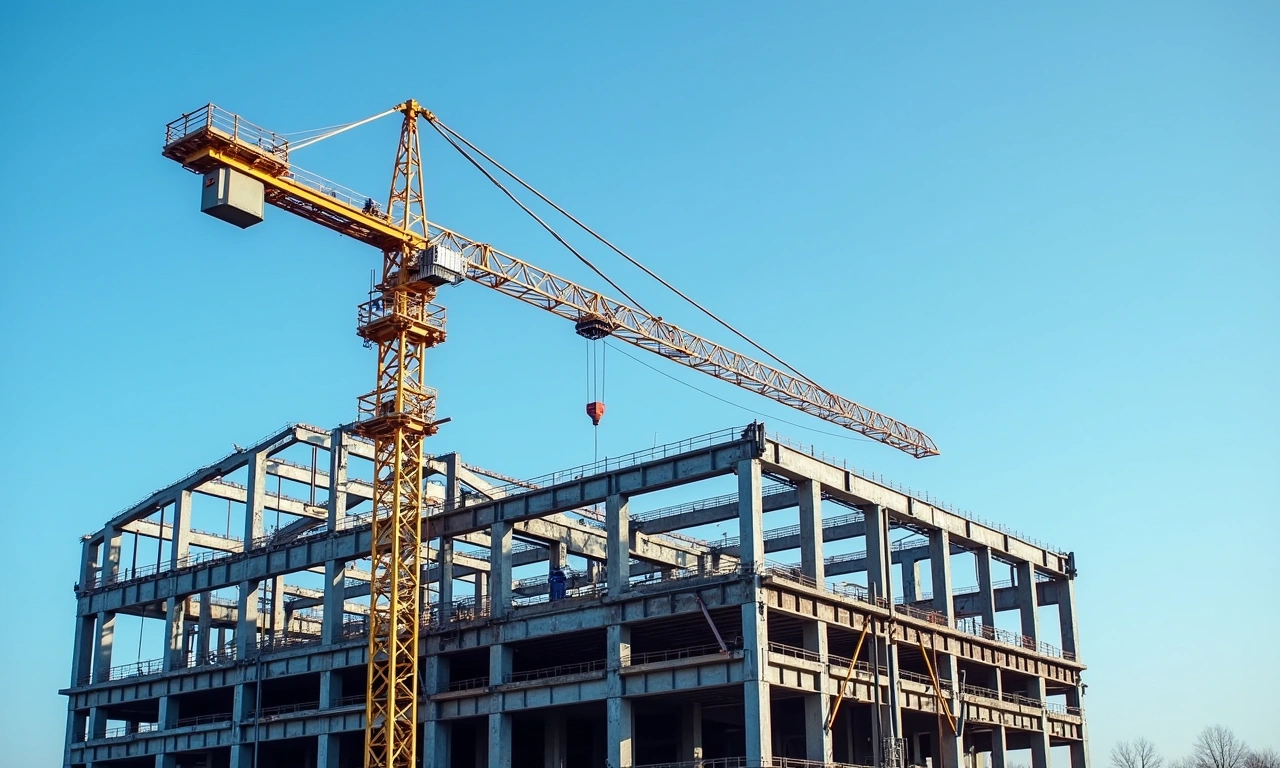
Manufacturing expansion is not a single credit event. Equipment acquisition, facility construction, and production scale-up each require distinct financing instruments applied in sequence.
Kentucky manufacturers misalign credit and phase more often than not. Equipment ABL advanced before PO confirmation leaves the lender exposed; construction financing deployed on non-compliant facilities creates MACRS reclassification risk.
The BlueOval SK demand signal in Hardin County creates genuine urgency. That urgency does not override the structural discipline required to ensure each expansion phase is funded with the right instrument.
The Fiduciary Problem
A manufacturer who advances equipment ABL before confirmed PO support locks in a 50–60% advance rate ceiling. The same equipment paired with verified BlueOval SK POs accesses a combined 70–75% facility. Ford Motor Company and SK Innovation are investment-grade obligors whose purchase orders on BlueOval SK contracts qualify as prime ABL collateral under institutional underwriting standards.
The fiduciary gap is not merely financial. A lender who advances against speculative expansion without PO confirmation carries underwriting risk that experienced credit committees will not approve at standard terms.
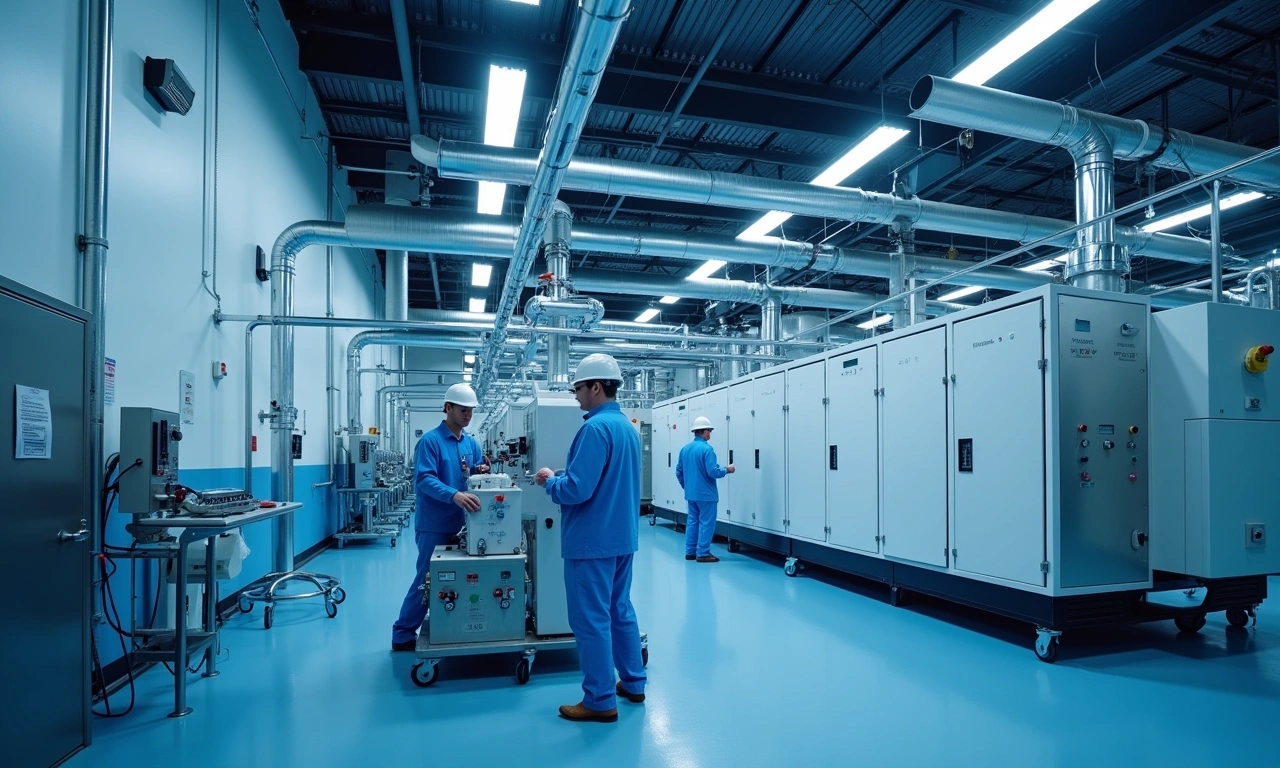
Facility construction presents a different risk topology. KBC 4101 humidity standard compliance is not merely a building code requirement — it determines MACRS depreciation classification for the constructed asset.
Non-compliant construction may be reclassified from 39-year real property to 15-year personal property under IRS Rev. Proc. 87-56. That reclassification alters the tax shield calculation underlying the lender's post-construction appraisal.
Kentucky manufacturers must engage both a certified contractor and a qualified tax advisor before construction begins. Facility ABL lenders require both a KBC compliance certification and a MACRS classification memo before advancing against construction collateral.
Regulatory Framework
The Kentucky Building Code 4101 series governs commercial and industrial construction standards applicable to manufacturing facility expansions. KBC 4101 humidity control requirements apply to all enclosed manufacturing spaces processing moisture-sensitive materials.
MACRS depreciation rules under IRS Rev. Proc. 87-56 classify manufacturing facility improvements based on primary use and structural characteristics. Compliant industrial construction qualifies as 39-year real property; non-compliant structures risk 15-year personal property reclassification.
NIST Manufacturing Extension Partnership (MEP) standards provide the technical framework for manufacturing process capability requirements applicable to suppliers entering BlueOval SK-adjacent supply chains. Lenders familiar with MEP standards apply process capability data to CAPEX credit sizing decisions.
UCC Article 9 governs security interest perfection in equipment and fixtures. Fixture filing requirements under KRS 355.9-501 apply to manufacturing equipment affixed to real property, requiring coordination between equipment ABL lenders and facility mortgage lenders.
NIST MEP standards provide technical benchmarks for Kentucky manufacturer production capability and quality system requirements applicable to supply chain financing and CAPEX credit structuring for BlueOval SK-adjacent expansion projects.
KEDFA Incentive Stacking and Private ABL Coordination
Kentucky Economic Development Finance Authority programs interact with private ABL facilities in ways most manufacturing operators underestimate. KEDFA’s Fast Track program provides tax benefits tied to new job creation thresholds; associated incentive agreements can be pledged as supplemental underwriting support in ABL packages without creating competing lien claims on equipment collateral.
The KEDFA Industrial Revenue Bond (IRB) program provides tax-exempt financing for qualified manufacturing facility construction and equipment acquisition. IRB proceeds can fund a portion of facility CAPEX at below-market rates, with private ABL completing the remainder of the capital stack. Coordinating the IRB draw schedule with private ABL advance triggers requires a financing timeline that both KEDFA counsel and the private lender agree to in advance of construction mobilization.
Kentucky Jobs Retention Agreement (KJRA) incentives and Kentucky Business Investment (KBI) program credits create ongoing tax asset streams that can be incorporated into FCCR projections used in ABL underwriting. KEDFA incentive documentation — including incentive letters, compliance schedules, and performance commitment timelines — must be disclosed to ABL lenders before facility execution to avoid MAC clause triggers.
Timing is the primary coordination risk between KEDFA and private ABL timelines. KEDFA approvals require board review on a quarterly cycle. Operators who require private ABL funding before KEDFA approval can obtain conditional facility commitments with KEDFA incentive activation as a subsequent covenant compliance event, preserving capital access while the incentive approval progresses.
JCTC (Job Creation Tax Credit) compliance requirements mandate minimum employment levels and wage thresholds that become ongoing covenants in KEDFA incentive agreements. ABL lenders reviewing KEDFA documentation assess whether JCTC compliance requirements impose financial obligations that affect the borrower’s FCCR and available cash for debt service.
Equipment Acquisition Phasing and Advance Rate Triggers
Multi-phase equipment acquisitions for Kentucky manufacturing expansion require deliberate advance rate sequencing. The first phase — acquiring production equipment under confirmed BlueOval SK purchase orders — establishes the highest advance rate available in the capital structure at 70–75% combined PO and OLV. Operators who defer general facility equipment to a second phase preserve their best advance rate for the highest-value assets.
The second phase — acquiring ancillary equipment not directly tied to open PO volume — reverts to equipment OLV only at 50–60%. Lenders applying two-phase advance structures typically lock the higher rate on Phase 1 equipment for the duration of the facility term, regardless of PO payoff timing.
USPAP-certified appraisals completed at the time of each equipment acquisition establish OLV values that remain valid for 12 months under most ABL facility terms. For multi-phase acquisitions spanning more than 12 months, lenders require updated USPAP certifications before advancing against Phase 2 equipment, adding 2–4 weeks to the Phase 2 funding timeline.
Equipment acquired under vendor financing arrangements creates UCC lien priority conflicts that must be resolved before ABL lenders will include those assets in the borrowing base. Operators using equipment financing from the original manufacturer must obtain a lien subordination agreement or lien release before incorporating vendor-financed assets into the ABL collateral pool. This coordination step is frequently overlooked and can delay facility funding by 3–6 weeks when discovered during lender due diligence.
Advance rate adjustments mid-facility occur when new equipment is added to the collateral pool through a borrowing base amendment. Most revolving ABL facilities allow new equipment collateral additions up to the original facility ceiling without requiring a full facility restructure, provided the new equipment meets eligibility requirements established in the original credit agreement.
Sale-Leaseback as Expansion CAPEX Source
Kentucky manufacturers with existing equipment equity can convert that equity into expansion capital through a sale-leaseback transaction without triggering a full ABL facility refinancing. Under a sale-leaseback, the operator sells eligible equipment to a third-party buyer and simultaneously executes a lease agreement for continued use. Proceeds from the sale provide immediate cash for expansion CAPEX independent of ABL advance mechanics.
The operating lease classification for sold equipment removes it from the ABL borrowing base but also eliminates the associated UCC lien, simplifying the remaining collateral pool. Lenders view sale-leaseback transactions favorably when the proceeds fund productive expansion rather than operating expense coverage, as the expansion increases future eligible collateral from incremental production capacity.
Sale-leaseback pricing for Kentucky industrial equipment is driven by equipment type, age, OLV, and secondary market liquidity. Precision machining equipment and battery production tooling command the most favorable pricing due to strong secondary market demand in the Hardin County region, with transaction pricing frequently reaching 85–95% of USPAP OLV for well-maintained equipment in active production classifications.
Tax treatment of sale-leaseback transactions requires careful structuring before execution. If the operator retains substantially all the benefits and risks of ownership under the lease terms, the transaction may be recharacterized as a secured financing arrangement by the IRS, affecting both tax treatment and balance sheet classification. Kentucky manufacturers should obtain a tax opinion before executing any sale-leaseback transaction where the leaseback term exceeds 75% of the equipment’s remaining useful life.
KEDFA program compliance adds a review requirement. Operators who received JCTC or KBI incentives tied to specific equipment acquisitions must confirm with KEDFA counsel that a sale-leaseback of that equipment does not constitute a compliance breach before proceeding. Most KEDFA incentive agreements include asset disposition restrictions during the compliance period.
CAPEX Credit Covenant Structure for Kentucky Industrial Operators
CAPEX credit facilities for Kentucky manufacturing expansion carry distinct covenant structures compared to revolving ABL facilities. Term elements — particularly equipment tranches — include scheduled amortization requirements beginning 6 to 12 months after initial advance, creating a fixed debt service obligation that must be incorporated into the operator’s cash flow projections from the facility outset.
FCCR testing for CAPEX facilities uses a trailing 12-month calculation that incorporates all debt service, including both the new CAPEX facility and any existing revolving ABL obligations. Combined debt service coverage testing ensures that expansion-phase cash flows are sufficient to service the full capital structure. Most Kentucky industrial CAPEX lenders require a minimum FCCR of 1.15× to 1.25× on a combined basis, higher than the 1.10× threshold applicable to equipment-only revolving facilities.
Covenant packages for construction facility tranches include construction progress milestones, draw schedule compliance, and KBC 4101 compliance certification at each inspection phase. Draws from the facility tranche are disbursed against completed construction milestones rather than in a single advance, with each draw requiring a lender-approved architect or engineer certification of milestone completion.
Material adverse change (MAC) clauses in CAPEX facility agreements carry particular significance for BlueOval SK-adjacent suppliers. A BlueOval SK production pause, supplier qualification suspension, or Ford Motor Company credit deterioration event constitutes a MAC event under most facility terms, triggering lender review rights and potential availability restrictions. Operators should negotiate MAC clause definitions carefully to distinguish between facility-level adverse events and broader market conditions before execution.
Annual field exam requirements for CAPEX facilities include equipment appraisal updates, facility inspection to confirm KBC compliance status, and borrowing base certificate reconciliation covering all facility tranches. These exams occur regardless of FCCR covenant compliance status and represent a fixed operational cost that must be budgeted as part of the facility administration burden.
A Glendale, Kentucky precision parts manufacturer wins a supply contract supporting BlueOval SK battery module assembly. The expansion requires $2.2M in CNC machining and inspection equipment and $1.6M in facility modifications to meet automotive-grade cleanliness standards.
Reshore Bridge structures a two-tranche CAPEX facility: an equipment tranche at 65% OLV ($1.43M) against verified BlueOval SK POs, and a facility improvement tranche at 70% of KBC-compliant improvement cost ($1.12M). Total combined availability is $2.55M.
The manufacturer draws the equipment tranche first against confirmed PO documentation, placing equipment in service within 45 days. The facility tranche follows construction completion and a post-improvement appraisal confirming KBC 4101 compliance and 39-year MACRS classification.

Quick Check
See what you qualify for in under 3 minutes.
No personal guarantee required. No hard credit pull. Revenue history is what qualifies you.
Check Capital Eligibility →PO validity as collateral is determined by the purchase order term, credit quality of the buyer, and the lender's assessment of delivery probability. BlueOval SK POs from SK Innovation or Ford Motor Company are treated as investment-grade counterparty commitments by Hardin County lenders, with advance eligibility matching the PO delivery schedule up to 12 months forward.
KBC 4101 compliance for facility ABL purposes requires a licensed Kentucky engineer's certification letter confirming that HVAC and moisture control systems meet the applicable humidity control standards for the manufacturing use classification. Lenders also require the building permit and certificate of occupancy reflecting the compliant use designation before funding the facility tranche.
Equipment and real property require separate security perfection mechanisms. Equipment is perfected via UCC-1 financing statement filed with the Kentucky Secretary of State. Real property improvements require a mortgage or deed of trust recorded in the Hardin County Clerk's office.
Fixture filing under KRS 355.9-501 bridges equipment affixed to real property, requiring coordination between the ABL lender and the real property mortgagee.
Ready to check your options?
Reshore Bridge connects operators with independent financing partners. Not a lender. Affiliate partnerships present.
Disclaimer: Financial figures on this page are illustrative only and do not represent guaranteed outcomes. Individual results will vary. See our full disclosure policy.
Check Capital Eligibility →